

Women Health & Hygiene Empowerment
Menstrual hygiene awareness, adolescent girls' dignity kit distribution, and community health worker capacity building across 4 villages in Lahore and Kasur.

of drinking water sources in Kasur meet safety standards — compounding severe hygiene risks for rural adolescent girls.
Source: Pakistan Council of Research in Water Resources (PCRWR) & UNICEF MICS — figures pending final ELF verification
In rural Kasur and Lahore, cultural taboos around menstruation leave 7 out of 10 adolescent girls with zero knowledge before their first period. Inadequate sanitation and lack of affordable supplies cause recurring school absenteeism, social isolation, and preventable reproductive tract infections.
Integrated directly alongside Good Water Project (GWP) infrastructure sites, this initiative pairs safe water access with community-based menstrual health education, door-to-door household visits, and adolescent school empowerment without redundant assessment costs.
Our response.
Female Community Health Workers (CHWs) recruited from target villages lead 80 structured awareness sessions reaching ~2,000 women and adolescent girls, alongside 840 door-to-door household visits to break generational stigma.
We deliver 24 school-based sessions reaching ~960 students, and distribute 500 complete Dignity Kits packed with sanitary pads, hygiene essentials, and Urdu guidance to adolescent girls aged 12–15 to protect their education, dignity, and future.

The work, as it happens.
Photographs from Education and Life Foundation programmes and the communities they serve.

Dignity Kits Distribution
Adolescent schoolgirls receiving their Dignity Kits in Lahore & Kasur, eliminating financial barriers and school absenteeism.

School-Based Adolescent Education
Interactive classroom session engaging students with pre-menarche guidance and safe menstrual hygiene habits.
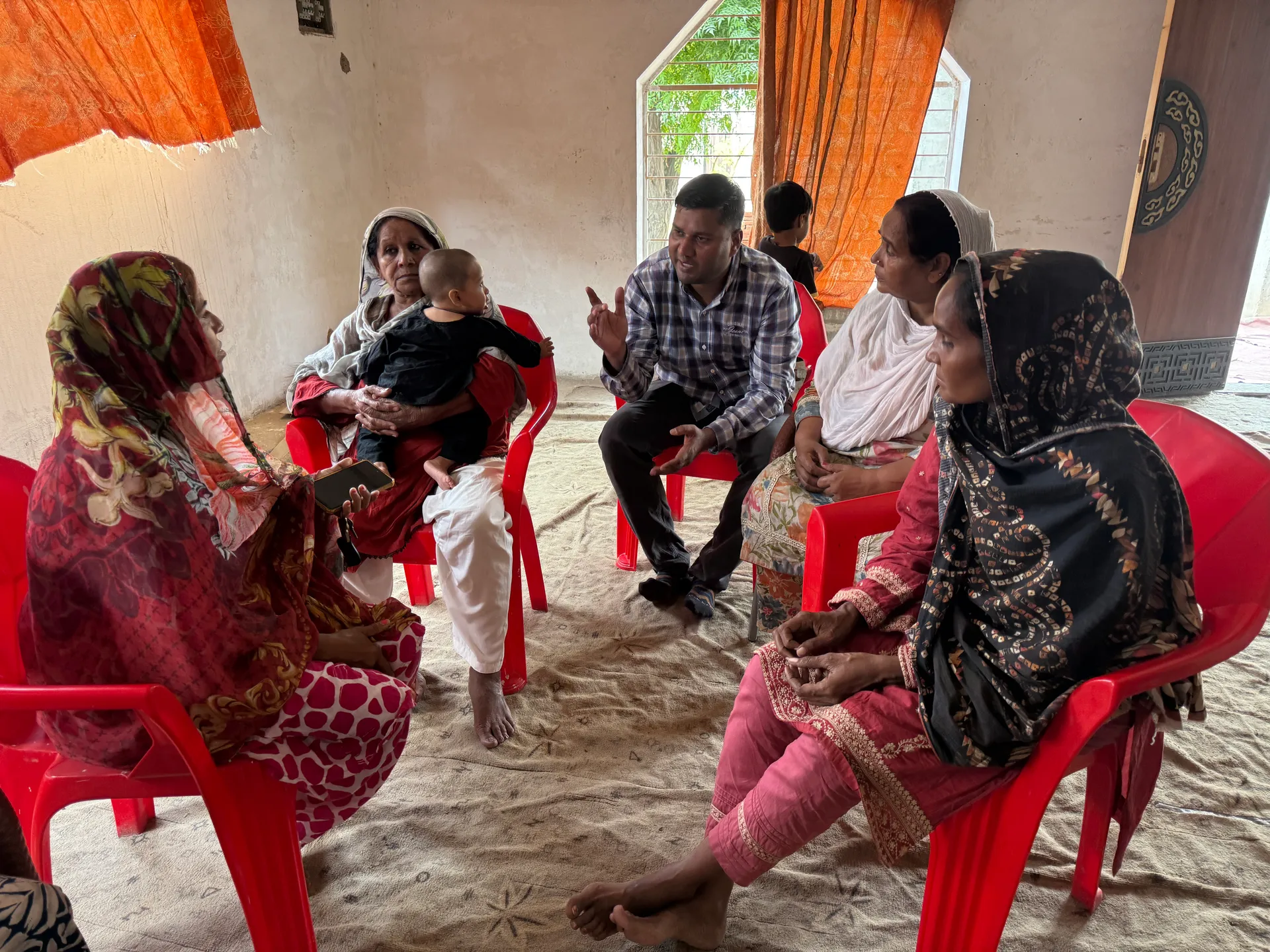
Community Awareness Gathering
Women and young girls gathered in an open village courtyard session led by female Community Health Workers.

Door-to-Door Household Outreach
CHWs conducting confidential, stigma-free counseling at family doorsteps across the 4 target villages.

Adolescent Girls Empowerment
Students holding their packaged Dignity Kits containing sanitary pads, hygiene supplies, and Urdu guidance.

Classroom Peer Learning
Interactive questions, workbook activities, and open dialogue breaking generational silence around pubertal health.
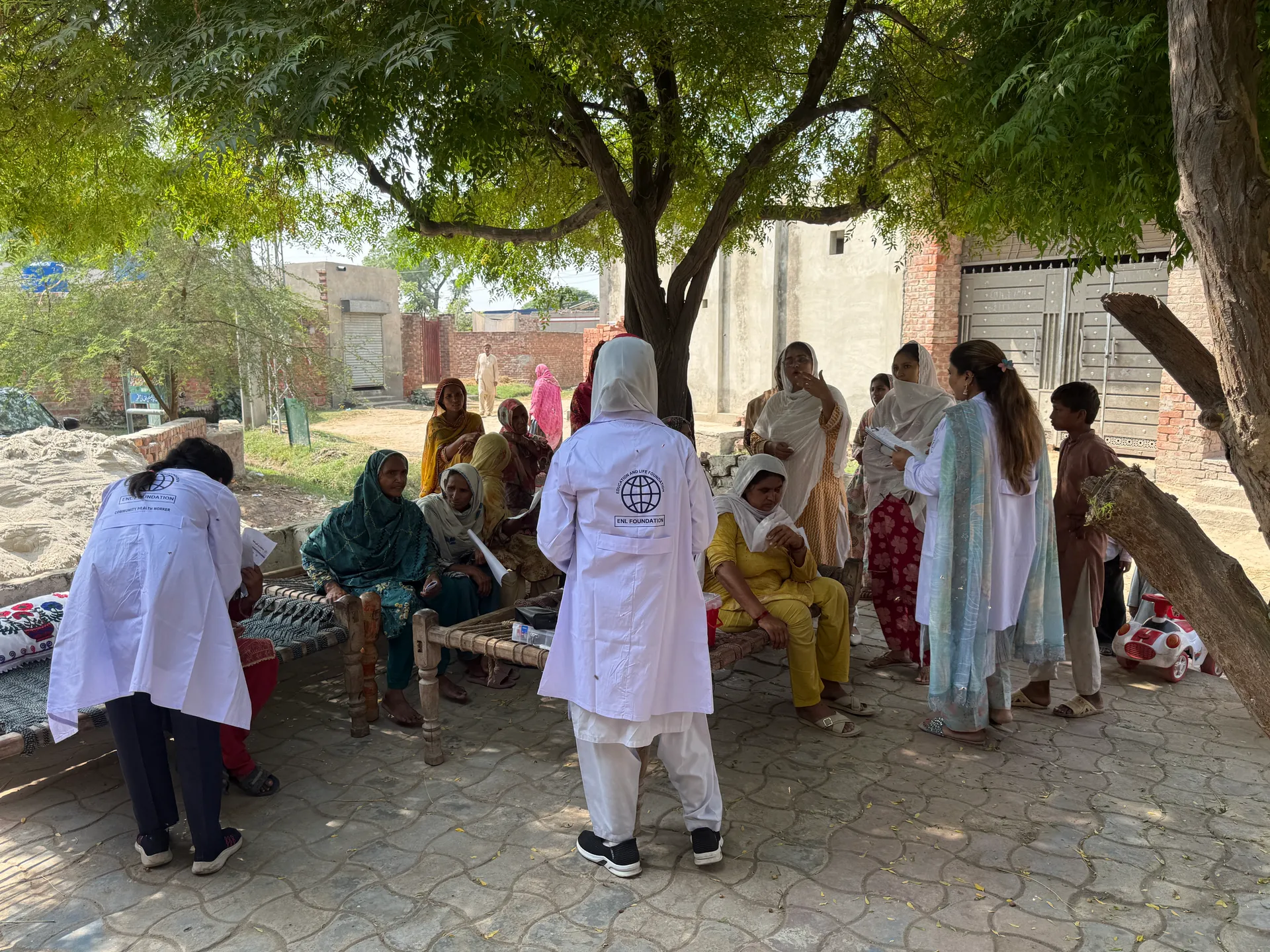
Village Women's Circle
Mothers learning proper sanitation and sunlight drying methods for reproductive tract infection prevention.

Personal In-Home Consultation
Reaching shy and restricted village daughters in their safe home environments across Lahore and Kasur.
Women Health & Hygiene Empowerment Project
A high-impact health, dignity, and sanitation intervention focusing on adolescent girls (ages 12–15), children, and rural households. Directly integrated into the 4 intervention villages of the existing Good Water Project (GWP) across Lahore and Kasur, this initiative couples safe drinking water infrastructure with vital menstrual hygiene management (MHM), personal health education, and dignified supplies.
Why Link With Good Water Project?
Reusing verified GWP water installation sites enables instant community trust, established village profiles, and zero assessment delays. Access to clean water means menstrual hygiene practices taught in sessions can actually be practiced safely at home and school.
Empowering 500 Adolescent Girls Across Lahore & Kasur
Photographic records from our field distributions, pairing complete Dignity Kits with compassionate pre-menarche guidance to ensure young girls stay in school without shame or fear.
Adolescent Dignity Kit Handover
Adolescent schoolgirl in uniform holding her packaged GN Pakistan Dignity Kit in Lahore.
Classroom Distribution Cohort
Students equipped with complete 9-item kits containing pads, soaps, sanitizer, and guides.

Ending Period Poverty
Empowering young girls to stay confident, healthy, and regular in their school attendance.

School Distribution Ceremony
Handover sessions organized alongside headmistresses and female Community Health Workers.
The Three Main Activities
To dismantle deep-seated cultural taboos, prevent school absenteeism, and protect adolescent girls from dangerous infections, the project executes three interlocking, on-ground education and engagement activities across all four target villages.
Community Awareness Sessions on Menstrual Hygiene & Health
Conducted by locally recruited female Social Mobilizers serving as Community Health Workers (CHWs), these interactive sessions bring together women, mothers, and adolescent girls in safe, culturally sensitive neighborhood gatherings.
4-Month Session Scaling Plan:
Curriculum & Learning Modules:
- Biological understanding of menstruation without stigma or shame
- Proper use, washing, drying in sunlight, and hygienic disposal
- Prevention of reproductive tract infections (RTIs) and skin rashes
- Mother-daughter open dialogue prior to adolescent menarche
Female Community Health Workers leading an interactive open-air session on menstrual hygiene in Ladeke Bhuller.
Dignity Kits Distribution
500 Adolescent Girls (Ages 12–15, At or Approaching Menarche)
In rural and low-income Pakistani communities, branded commercial sanitary pads are an unaffordable luxury. Low-income families prioritize flour and fuel over hygiene products, forcing young girls to use unwashed rags, dried husk, or old fabric—causing acute reproductive infections and school dropouts. Each Dignity Kit provides the complete supplies necessary to protect a girl’s dignity, health, and classroom attendance.
Unit Cost: PKR 2,000 (~$7.07 USD) · Total Budget: PKR 1,000,000 ($3,537 USD)
What Goes Inside Each Dignity Kit
Sanitary Pads (9–10 pad packs)
High-absorbency, breathable disposable pads with secure adhesive wings.
Prevents leakages and enables adolescent girls to attend school with confidence and peace of mind.
Orientation & Capacity-Building Session
Sustainable health transformation cannot happen through top-down mandates. In Month 1, GN Pakistan and ELF convene an intensive project orientation and coordination workshop, bringing together key institutional stakeholders, field leadership, and front-line health workers.
Workshop Scope & Deliverables:
- Expert-Led Scientific Training: Training female Social Mobilizers / CHWs on evidence-based Menstrual Hygiene Management (MHM), infection prevention, and adolescent psychology.
- Cultural De-escalation & Stigma Navigation: Equipping mobilizers with tactical communication strategies to diffuse conservative pushback and engage village patriarchs respectfully.
- Monitoring & Attendance Protocols: Setting up rigorous reporting sheets, daily participant logs, household visit verification, and Dignity Kit distribution manifests.
- Multi-Partner Coordination: Aligning GN Pakistan Lahore field office, Implementing Partners, Hamsaaya technical team, and local government health representatives.

Includes technical expert stipends, travel allowances for CHWs & community representatives, hall rental, multimedia projection, seating setup, and refreshments/lunch for participants.
Project Coverage by District & Village
The project is deployed across four distinct rural villages with existing Good Water Project installations, pairing safe water taps with structured personal hygiene outreach.
Ladeke Bhuller
Existing GWP water infrastructure site; high adolescent schoolgirl population with acute pre-menarche information gaps.
Lakhoki
Peri-urban village cluster where low maternal literacy restricts home discussions on reproductive health.
Katluhi Kalan
Rural settlement in Kasur facing severe groundwater contamination and industrial runoff; critical hygiene priority area.
Gadhoki
Isolated agricultural village where girls routinely miss school during menstrual cycles due to absence of sanitary pads.
Why Menstrual Hygiene Awareness Cannot Wait
Data from the Pakistan Council of Research in Water Resources (PCRWR), UNICEF MICS, and recent clinical studies reveal a compounding crisis: contaminated water, absent pre-menarche information, and acute gender disparities.
PCRWR national monitoring repeatedly ranks Kasur among Pakistan’s least safe cities: only 1 in 10 water sources meets national safety standards. Close to 45% are contaminated with microbial pathogens.
National monitoring in Lahore found safe drinking water in fewer than 1 in 3 sources. Contaminated water dramatically magnifies the risk of reproductive infections when hygiene practices are poor.
A 2024 cross-sectional study (Cureus) of adolescent schoolgirls in rural Lahore found only ~30% had received any information prior to their first period, causing extreme fear and emotional trauma.
A stark gender literacy gap (57.44% female vs 67.97% male, 2023 Census) mirrors the severe school-attendance and engagement barriers rural girls face once they reach puberty without hygiene supplies.
Timeline & Monthly Beneficiary Cadence
From initial community mobilization in September through final Dignity Kit distribution and monitoring in December 2026.
Mobilization & Capacity Launch
Key Milestones & Operations Scheduled:
- Recruitment of 2 local female Social Mobilizers / CHWs
- Comprehensive Stakeholder Orientation & Capacity-Building Workshop (10–15 key partners)
- Introduction to village elders and GWP site committees in Lahore & Kasur
- Initial 12 community awareness sessions (3 per village per week)
- Initial 120 confidential door-to-door household assessments (15 HH/district/week)
- First round of 6 school-based adolescent sessions across 6 schools
Total Project Budget Breakdown
PKR 2,270,000 (Approx. USD $8,030 @ 282.7 PKR/USD)
Every rupee is mapped directly to measurable community deliverables. 66.52% of all funds directly purchase dignity kits, session supplies, and educational materials; 33.48% supports female Community Health Workers, local logistics, and financial oversight.
Program Delivery Costs
Dignity Kits for 500 Adolescent Girls
500 comprehensive kits @ PKR 2,000 per kit ($7.07 USD)
School-Based Menstrual Hygiene Sessions
24 expert-led classroom sessions across 2 districts @ PKR 10,000
IEC Materials (Distribution, Sessions & Kits)
Multipurpose informational, educational, and visual materials
Project Orientation & Capacity-Building Workshop
Expert stipends, venue hire, multimedia, travel & lunch for 10–12 participants
Learning Materials (Posters & Booklets)
Design and full print run of visual anatomy and hygiene posters & booklets
Community Sessions (80) & Door-to-Door Visits (840 HH)
Directly delivered by budgeted CHWs (zero duplicate program line)
Support & Human Resource Costs
2 Social Mobilizers / CHWs (4 Months)
Dedicated female field mobilizers (PKR 50,000 × 2 × 4 months)
Travel & Field Logistics
Local inter-village travel and logistical support (PKR 50,000 × 4 months)
Finance Officer Contribution
Financial reporting, compliance, and ledger oversight (PKR 30,000 × 4 months)
Stationery, IT Support & Communications
Field reporting forms, digital communications, and connectivity (PKR 10,000 × 4)
Monitoring & Evaluation (GN Lahore & HO Team)
Core technical oversight (PKR 200,000 charged to institutional R&D)
Building Lasting Awareness Capacity in Every Village
Unlike short-term relief drops, this intervention is designed to leave permanent human capacity behind. By recruiting female Social Mobilizers and Community Health Workers from within the intervention communities themselves, local capacity to educate young girls, counsel new mothers, and manage hygiene supplies remains rooted in the villages long after the 4-month project period concludes.